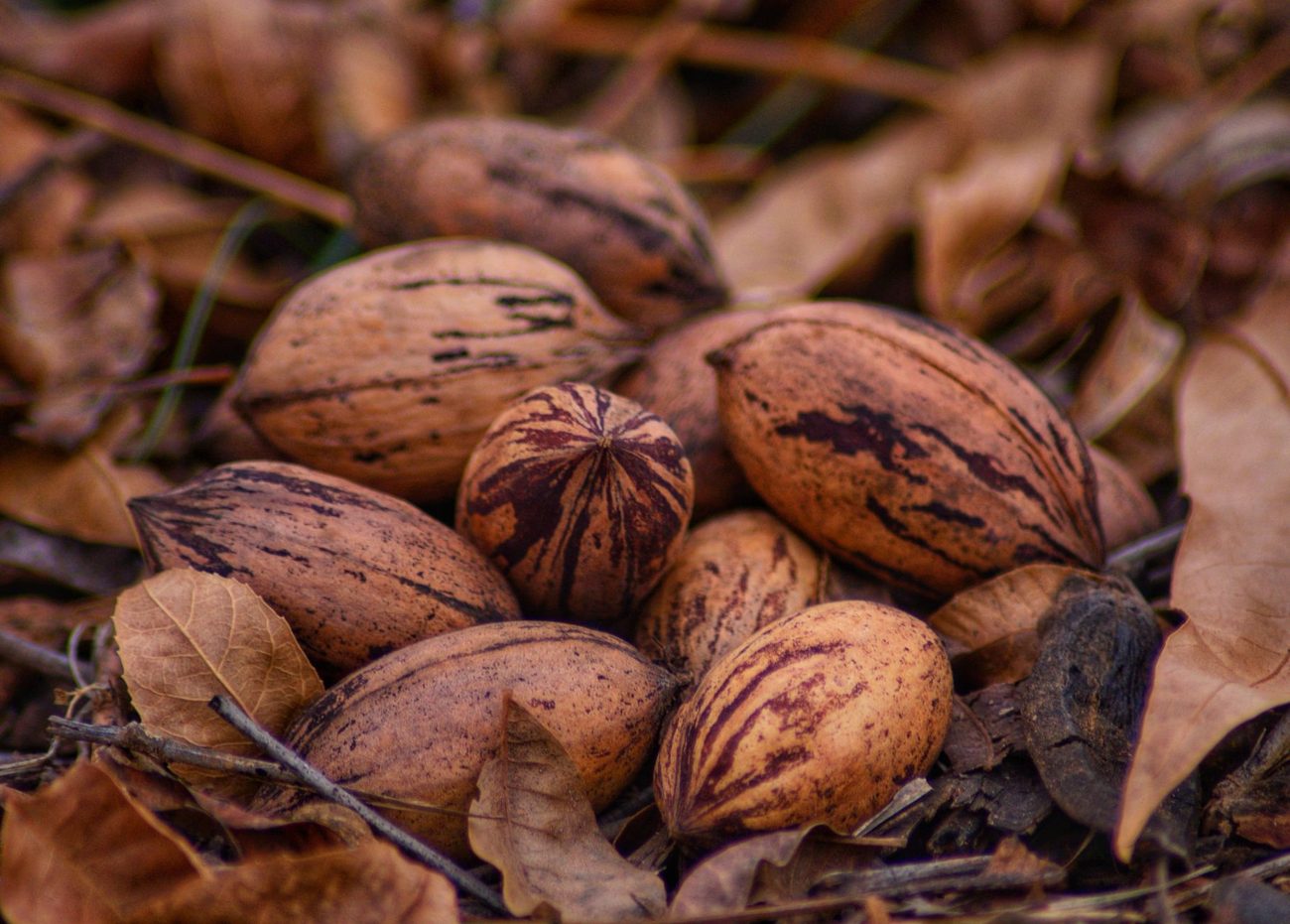
The first pecan hit the carport roof at about two in the morning with a sound like a dropped marble. Then another. By breakfast the wind had picked up, and the back lawn was scattered with nuts still half in their split green husks. Pepper was out there before I'd finished my coffee, nose down, tail going, thoroughly convinced that the whole yard had been arranged for him.
We have two big pecan trees on our half-acre, both older than the house, which was built in 1958. They were part of what sold us on the place when we moved down from Columbia in 2021. I pictured pies. I did not picture the work, or the squirrels, or the way a good pecan year takes over the back half of October. Five falls in, I've come to love it anyway.
Good years and lean years
Pecan trees tend to alternate. One year they're heavy with nuts, the next they rest. Last year was thin, a couple of grocery bags at most, and half of those were hollow. This year is a heavy one. Ben estimates we'll pick up something like forty pounds before the trees are done, though that's a guess made while standing in the yard with his hands on his hips, which is how surveyors estimate most things that aren't on the clock.
The nuts start dropping in mid-October here and keep coming into November. A good wind or a passing cold front brings down a whole batch at once.
Gathering without wrecking your back
For our first two seasons I picked every nut up by hand, bent double, and paid for it for days. Now we use a roller-style nut gatherer, a wire cage on a long handle that you push across the grass. It cost about thirty dollars at the farm supply store and is easily the best thing we've bought for the yard. Lila loves it. She'll roll it back and forth for twenty minutes, then dump the cage into a bucket and announce the count.
A few things we've learned:
- Gather often. Every day or two during peak drop. Nuts left on wet grass can mold, and the squirrels and crows get the rest.
- Keep the grass short in early October so the nuts are easy to see and roll.
- Toss the floaters. When we bring a bucket in, we dump it in water. Nuts that float are usually empty or bad.
- Watch the beagle. Pepper doesn't eat whole pecans, thank goodness, but she will happily chew the husks, which upset her stomach. He wears his leash in the yard during the drop.
Drying, cracking, and shelling
Fresh pecans need to cure before you crack them. We spread them in a single layer on old window screens set across sawhorses in the shed, where it's dry and the air moves. Two weeks or so, stirring them now and then, and the kernels go from soft and slightly bitter to crisp and sweet.
Cracking is the long part. We have a lever-style cracker that clamps onto the edge of the kitchen table, and in the evenings Ben and I sit with a bowl in front of each of us and a paper sack for shells between, watching a show or just talking. Lila handles the picking, prying the halves out with a nut pick and eating roughly one in every four.
Some farm stands and feed stores in the area offer machine cracking by the pound for a small fee if you have a big haul. We haven't tried it yet, partly because I've come to like the evenings at the table.
Storing the harvest
Shelled pecans go rancid within a few weeks at room temperature because of their oils. The freezer is the answer:
- Sort out any bits of shell or dark, shriveled kernels.
- Pack into freezer bags in two-cup portions, which is about what most recipes call for.
- Press out the air, label with the year, and lay flat to freeze.
Frozen this way, they keep beautifully for a year or more, which carries us through a lean year if the trees take a rest next fall. Unshelled nuts last a few months in a cool, dry spot, so I keep a sack in the pantry for cracking as needed.
Where they all go
- A pecan pie for Thanksgiving, of course, and another for Christmas.
- Toasted pecans on oatmeal and in salads all winter.
- Small jars as gifts for neighbors, teachers, and my two bookkeeping clients, tied with a bit of ribbon. It's the most welcome gift I give all year, and it costs nothing but time.
- Candied pecans, which disappear faster than I can make them.
The rhythm of it
There's something steadying about a chore that comes on its own schedule. I don't decide when pecan season starts. The trees do, and the wind does. All I have to do is pay attention, go out with the bucket in the morning, and sit at the table in the evening with a cracker and a bowl.
This afternoon the light is low and gold through the branches, and the squirrels are working one tree while Lila works the other with her roller. There's a bucket on the porch steps already a third full. Tonight, if the weather holds, we'll start cracking.