Every spring there is a morning when I walk out to the carport and Ben's truck has turned from gray to a soft, chalky yellow. You can write your name on the hood. Lila did, in fact, this year, in letters a foot tall, plus a drawing of Pepper that looked more like a loaf of bread. The pine pollen had arrived, and for the next several weeks the whole of Orangeburg wore a fine coat of it: porch screens, patio chairs, the dog, the dog's water bowl.
By now, in late May, the worst of it has passed, and the rain we had last week rinsed most of the yellow off the carport slab and into little gold rings around the puddles. So this feels like a good moment to write down what worked this year, while I still remember which habits earned their keep.
The front line: shoes, mats and the dog
Most of the pollen that gets into our house walks in. It rides on shoes, on jackets, and most of all on a beagle who likes to roll in the side yard.
- Two mats, not one. A coarse rubber mat outside each door and a washable cotton rug just inside. The outside one scrapes, the inside one catches. I shake the outside mats every couple of days and wash the inside rugs on Saturdays.
- Shoes off at the door. We already mostly did this, but in pollen season it becomes a firm rule. A basket by the back door holds everyone's house shoes.
- A towel for Pepper. An old bath towel hangs on a hook by the porch door. Before she comes in from the yard, she gets a quick rubdown, paws included. She tolerates it the way she tolerates baths, with deep sighs.
Damp, not dry
This is the one change that made the biggest difference. Dry dusting just lifts pollen into the air and sets it down somewhere else a few minutes later, usually on the same surface. A barely damp cloth picks it up and keeps it.
My routine during the heavy weeks went like this:
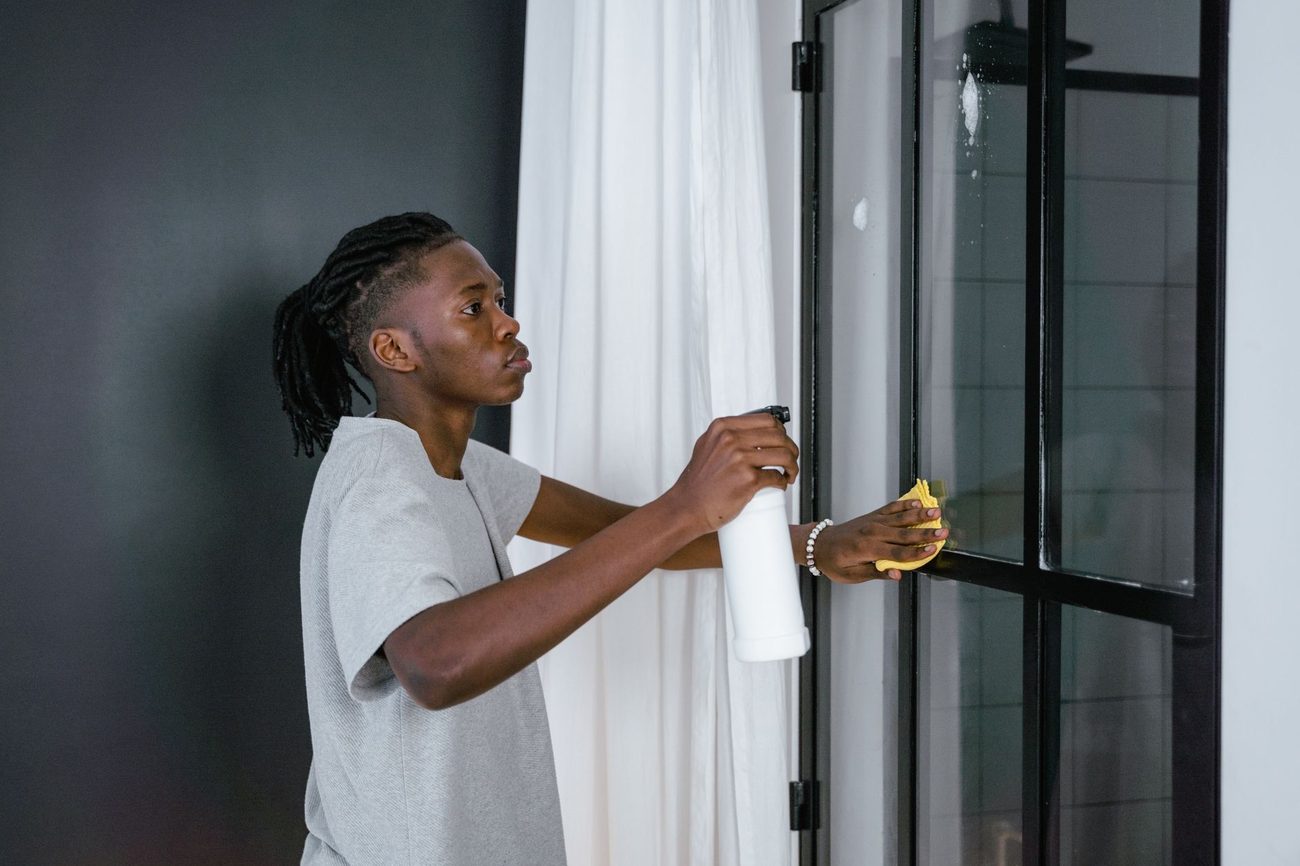
- Wipe windowsills and the tops of baseboards near doors with a damp microfiber cloth, twice a week.
- Run the vacuum with the brush roll off over the hardwood, then follow with a damp mop in the entry, kitchen and hallway.
- Rinse the cloths in the laundry sink rather than shaking them out on the porch, which only sends the pollen back where it came from.
Our floors are the original 1958 hardwoods, so "damp" really does mean damp, not wet. I wring the mop until it barely leaves a sheen.
Windows, screens and the porch
I love the first warm weeks with the windows open. Pollen season is the price. This year we compromised: windows stayed closed on dry, breezy days, when the yellow drifts like smoke off the pines down the road, and opened after a good rain, when the air is rinsed clean for a day or two.
The screened back porch is a lost cause until the pollen is done, and I have stopped fighting it. Once it eased off this month, Ben hosed down the screens from the outside on a still morning, and I wiped the table and chairs with warm soapy water. The cushions went through the washer on cold. It took a Saturday morning and left the porch smelling like wet concrete and soap, which I will take over pollen any day.
The filter, inside where you cannot see it
Our heat pump got its spring service in April, and the technician pointed at the return filter and said, kindly, that it was working very hard. During pine season we change the filter more often than the package suggests, about every four to five weeks instead of every three months. A pack of basic pleated filters is cheaper than the extra sneezing.
A few more small things that helped:
- Bedding washed weekly in hot water instead of every ten days or so.
- Hair washed at night instead of in the morning for anyone with itchy eyes, so the pillow stays clean.
- Jackets hung on hooks by the door rather than tossed on the bed or couch.
I gave up on a spotless car, on keeping the porch furniture clean in April, and on the idea that a house in a pine-heavy part of South Carolina can be pollen-free for six weeks in spring. It cannot. The goal is just to keep most of it on the other side of the door.
And some of it is worth enjoying. On the drive home from the library one Saturday morning, a gust came across the road from the pines and the air in front of us turned gold, a whole shimmering cloud of it. Lila, who is seven and suffers from none of my allergies, pressed her face to the window and said it looked like the woods were breathing. I sneezed three times in a row. She was right anyway.